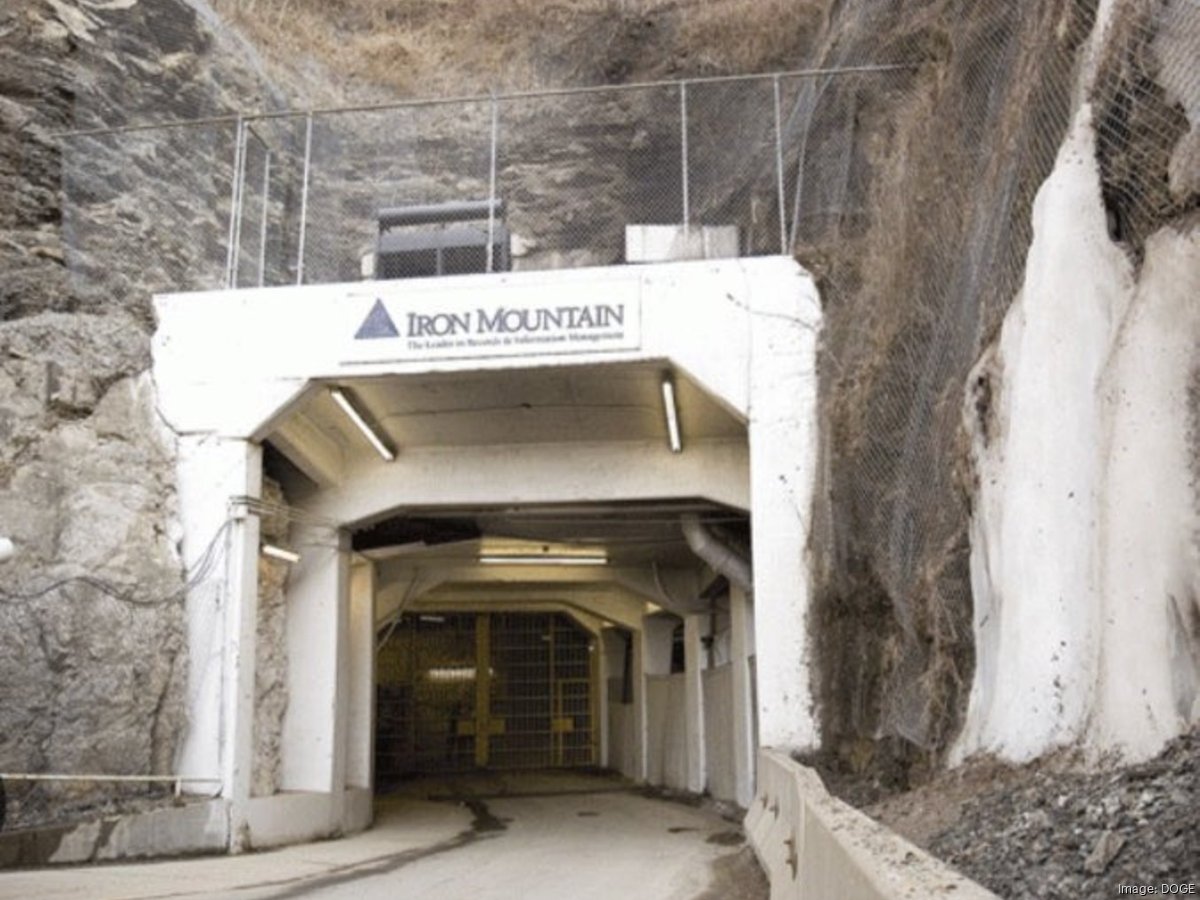
Deep beneath the rolling hills of western Pennsylvania, 220 feet underground in a former limestone mine, lies one of America's most secure repositories. What began as a mushroom farm and evolved into a Cold War nuclear bunker has become the nation's most trusted vault for irreplaceable records—including the master recordings of Elvis, the original photos of American presidents, and now, the family memories of Eternity.Photos customers.
This is the story of Iron Mountain.
Chapter 1: The Mushroom Years (1936-1951)
Our story begins not with nuclear threats, but with fungi. In 1936, the National Limestone Company had been mining the hills of Boyers, Pennsylvania for decades. The miles of tunnels left behind created perfect conditions for an unexpected crop: mushrooms.
The constant 55°F temperature, high humidity, and complete darkness were ideal for cultivation. For fifteen years, the mine's primary purpose was agricultural—producing millions of pounds of mushrooms annually for the American market.
But in 1951, everything changed.
"The same qualities that make an excellent mushroom farm—stable temperature, isolation, solid rock overhead—also make an excellent bomb shelter. It just took the right combination of paranoia and entrepreneurship to see it."
— Historian Robert Sullivan, "The Underground Railroad of Records"
Chapter 2: The Atomic Age (1951-1954)
The Soviet Union detonated its first nuclear weapon in 1949. By 1951, Cold War anxiety was reaching fever pitch. American businesses suddenly faced an existential question: what happens to our records if our headquarters is vaporized?
Herman Knaust, a pioneering records management entrepreneur, recognized an opportunity. He acquired the Boyers facility in 1951 with a revolutionary vision: create an atomic-proof vault where corporations could store backup copies of their most critical documents.
The pitch was simple and terrifying. A Soviet nuclear attack on New York or Pittsburgh would destroy corporate headquarters—and with them, every stock certificate, insurance policy, and business record. Without backup copies stored far from population centers and deep underground, civilization's economic infrastructure could simply cease to exist.
The mushrooms were out. The records were in.
Chapter 3: The Iron Mountain Name (1954)
In 1954, Knaust formally established the storage business under the name that would become legendary: Iron Mountain Atomic Storage, Inc.
The name was deliberately evocative. "Iron" suggested strength and permanence. "Mountain" emphasized the geological protection. And "Atomic Storage" directly addressed the fear that drove demand.
Foundation: Iron Mountain Atomic Storage, Inc. established in the former limestone mine. First clients include major insurance companies seeking off-site record protection.
Cuban Missile Crisis: Demand surges as the world comes closest to nuclear war. Corporate clients rush to secure backup copies of essential records.
Hollywood Arrives: Major film studios begin storing master recordings. The constant temperature and humidity prove perfect for preserving film stock.
The Digital Transition: First computer tape backups stored. Iron Mountain begins its evolution from physical records to data preservation.
IPO: Iron Mountain goes public on NYSE. Revenue tops $400 million annually.
Revenue Milestone: Company revenue exceeds $6.8 billion. The Boyers facility remains the crown jewel of the global network.
Chapter 4: What's Really Inside?
Today, the Iron Mountain complex at Boyers encompasses over 145 acres of underground space—more than 2,000 individual storage vaults carved from solid limestone. The temperature maintains a constant 55°F with 40% relative humidity—conditions archivists describe as "the closest thing to perfect preservation on Earth."
Underground storage corridors stretch for miles beneath the Pennsylvania hills
The client list reads like a who's-who of American institutions:
- Warner Bros: Original negatives of classic films including Casablanca and The Wizard of Oz
- Universal Music: Master recordings from Elvis Presley, The Beatles, and hundreds of other artists
- Smithsonian Institution: Overflow archive materials too numerous for D.C. facilities
- Social Security Administration: Backup records for millions of Americans
- Major Banks: Original signed documents, stock certificates, and financial records
- U.S. Government: Historical documents too sensitive to specify
And now, alongside these irreplaceable cultural artifacts, rest the family photo archives of Eternity.Photos customers.
🏆 ISO Certifications
Iron Mountain maintains the highest industry certifications for information security and quality management: ISO 9001:2015 (Quality), ISO 27001:2022 (Information Security), ISO 14001:2015 (Environmental), ISO 45001:2018 (Health & Safety), plus SOC 1 Type II, SOC 2 Type II, and SOC 3 compliance.
Chapter 5: The Underground City
Visitors to the Boyers facility often use the same word: surreal.
The entrance looks like an ordinary industrial building. But once past security—and there is substantial security—you descend into what can only be described as an underground city. Miles of corridors connect vault chambers. There's an internal road system where employees drive golf carts and small vehicles. Climate control systems hum constantly.
The ceiling, if you can call it that, is solid limestone—the same rock that's been there for 400 million years. The floor is level concrete, but the walls retain the texture of the original mine cuts. It's a strange hybrid of industrial efficiency and geological timelessness.
"The first time you realize there's 220 feet of solid rock above your head, it changes your perspective. This isn't storage. This is entombment. The things down here will outlast everything on the surface."
— Facility tour guide
Security Measures
Iron Mountain doesn't publicly detail all security measures—which is itself a security measure. But known elements include:
- Biometric access control at multiple checkpoints
- 24/7 video surveillance throughout the facility
- Armed security personnel on site continuously
- Natural EMP protection from the surrounding limestone
- Backup power systems with extensive fuel reserves
- Fire suppression using inert gas systems that won't damage records
- Climate monitoring with automated alerts and redundant systems
The facility is also protected by geography. Boyers is far from any major city—potential nuclear targets during the Cold War, potential terrorist targets today. The nearest significant population center is Pittsburgh, 50 miles away.
Chapter 6: From Nuclear Fear to Digital Anxiety
The original Iron Mountain clients were motivated by nuclear fear. Today's clients are motivated by something different but equally pressing: digital impermanence.
Consider the irony: we have more data than ever, and it's never been more vulnerable. Hard drives crash. Cloud companies fold. Formats become obsolete. Ransomware attacks encrypt entire archives.
Iron Mountain's value proposition has evolved accordingly. The same geological protection that would have shielded records from a Soviet warhead now shields physical archives from cyber attacks, electromagnetic pulses, and the slow rot of digital obsolescence.

Physical film archives provide technology-independent preservation
This is why Eternity.Photos chose Iron Mountain as one of our two vault locations. When your digital photos are converted to physical microfiche, they need a home that matches the medium's permanence. A basement won't do. A bank vault won't do. Only something like Iron Mountain—with its geological isolation, climate perfection, and institutional permanence—can provide true long-term security.
Chapter 7: The Two-Vault Strategy
At Eternity.Photos, we believe one vault isn't enough. That's why every customer archive exists in two locations:
- Iron Mountain (Pennsylvania, USA): Faster retrieval, US-based legal residency, 70+ years of proven operation
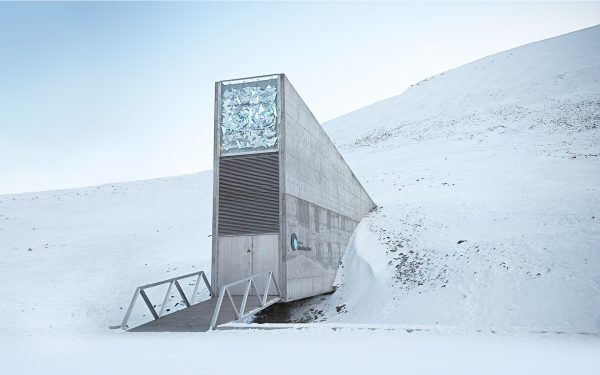
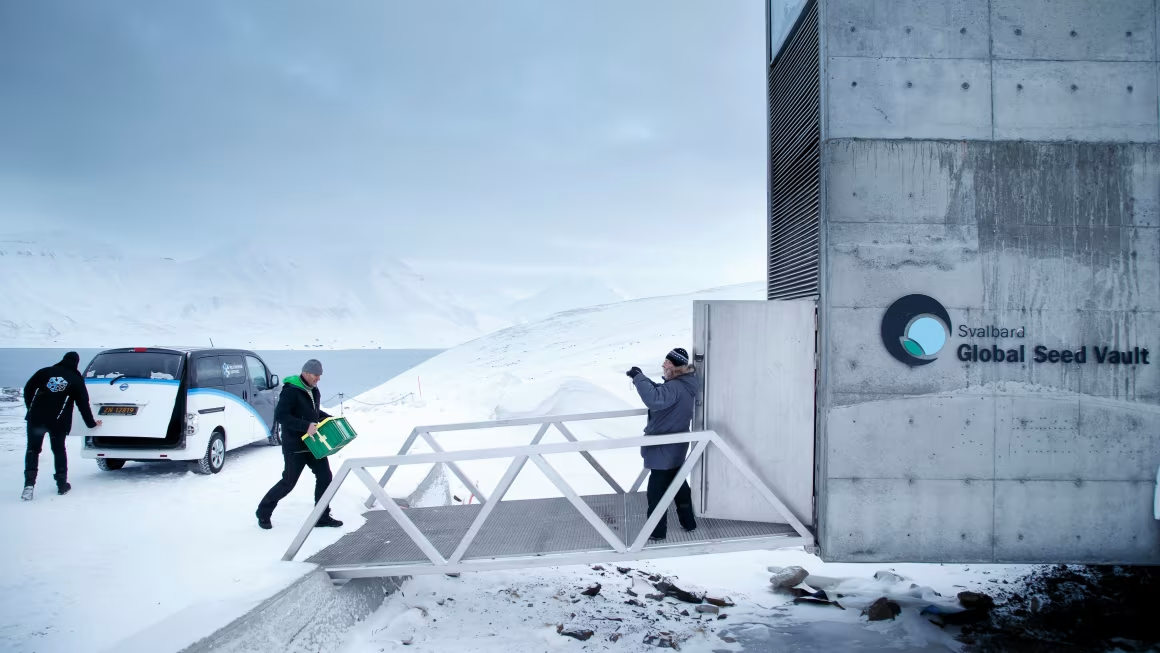
- Arctic World Archive (Svalbard, Norway): International treaty protection, permafrost stability, maximum geographic separation
If any regional disaster—natural or man-made—affects one location, the other remains secure. Your family photos are protected not just by rock and climate control, but by the fundamental principle of redundancy.
🏔️ Your Memories, Alongside History
When you choose Eternity.Photos, your family photos rest alongside the original recordings of Elvis, the negatives of classic Hollywood films, and documents that shaped American history. You're not just storing memories—you're adding your family's story to the archive of human civilization.
The Legacy Continues
Iron Mountain has survived the Cold War, the digital revolution, and the rise of cloud computing. The company that began with atomic-age anxiety now protects the cultural and personal archives of a new generation.
The mushroom farm is long forgotten. The nuclear bunker mentality has faded. But the limestone remains—400 million years old and counting. And deep within that stone, protected by the same qualities that make great wine cellars and nuclear shelters, rest the things we've decided must endure.
Your family's photos could be among them.
Not stored. Entombed. Forever.