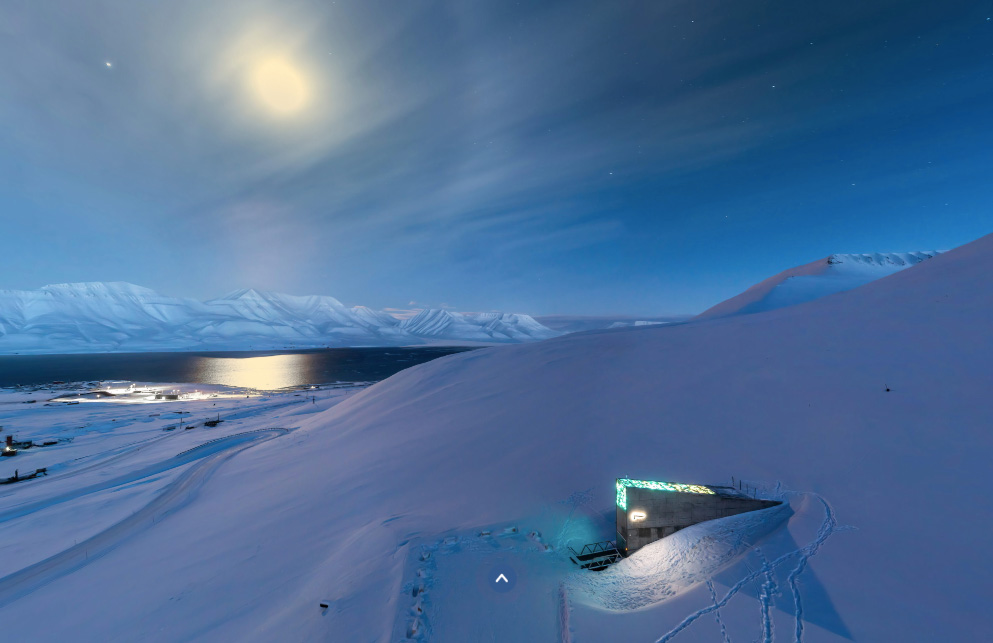
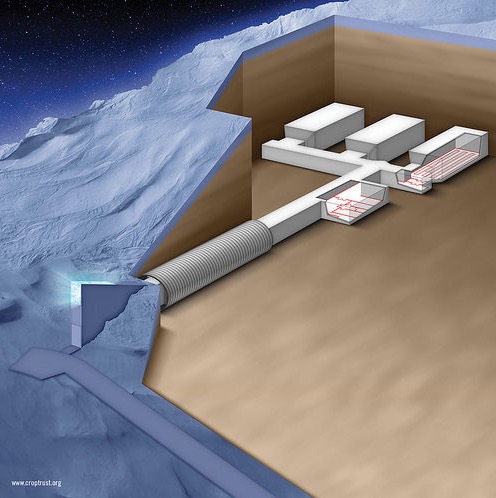
At 78°14' North latitude, on the Norwegian archipelago of Svalbard, there exists one of humanity's most ambitious preservation projects. Buried 300 meters deep inside a decommissioned coal mine, the Arctic World Archive represents our civilization's most serious attempt to create a truly permanent repository for human knowledge and memory.
This is where your photos could be stored. This is what "forever" actually looks like.
The Location: Why Svalbard?
The choice of Svalbard wasn't arbitrary—it's the result of careful analysis of what conditions best preserve physical media for millennia. Several factors make this remote archipelago uniquely suited for long-term storage:
Natural permafrost provides passive cooling—even if all power failed, the temperature would remain cold enough to preserve film indefinitely. The sandstone mountain is seismically stable and provides natural protection against radiation, electromagnetic pulses, and physical attack.
But perhaps most importantly, Svalbard exists in a unique legal and political space. The 1920 Svalbard Treaty, signed by 46 nations, established the archipelago as a demilitarized zone. It cannot be attacked, occupied, or used for military purposes by any nation. This legal protection adds another layer of permanence that no private facility can match.
Neighbors: The Global Seed Vault
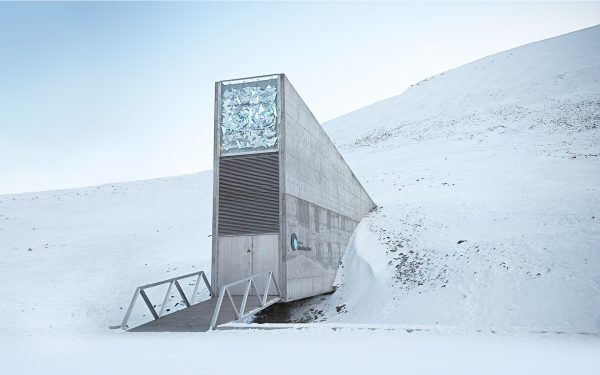
The Arctic World Archive isn't alone in recognizing Svalbard's potential. Just a short distance away sits the famous Svalbard Global Seed Vault, often called the "Doomsday Vault," which stores backup copies of seeds from gene banks worldwide.
The Svalbard Global Seed Vault, neighbor to the Arctic World Archive
Both facilities share the same philosophy: some things are too important to leave to chance. The seed vault protects global food security; the Arctic World Archive protects human knowledge and memory.
"We're not building for the next decade or even the next century. We're building for the next millennium. The decisions we make today will echo for generations we can't even imagine."
— Rune Bjerkestrand, Project Director
What's Inside?
The Arctic World Archive doesn't just store family photos—though it certainly does that too. The facility has become a repository for some of humanity's most precious cultural heritage:
- The Vatican Library: Digital copies of ancient manuscripts, including some of the oldest known biblical texts
- GitHub Arctic Code Vault: Snapshots of all public source code repositories—the digital DNA of modern civilization
- National Archives: Constitutional documents from Norway, Brazil, Mexico, and other nations
- Cultural Heritage: Indigenous languages, traditional music, and oral histories from cultures around the world
- Space Data: Mission recordings and research data from the European Space Agency
- Family Memories: Personal photo archives from private customers like Eternity.Photos users
Your family photos would rest alongside the Vatican's ancient texts and GitHub's code. That's the company your memories keep in the Arctic World Archive.
❄️ The Technology: Piqlfilm
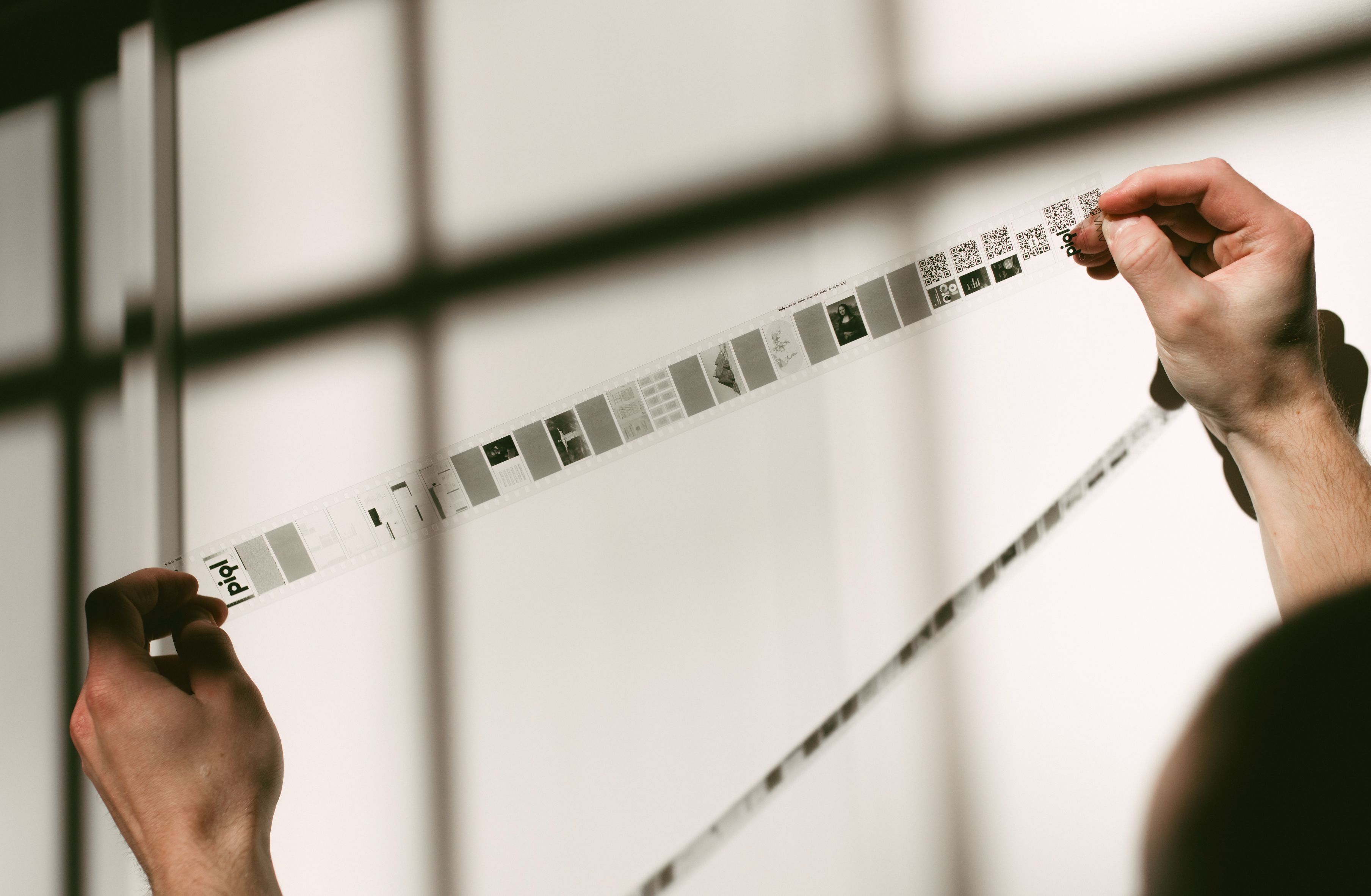
Data in the Arctic World Archive is stored on a proprietary medium called piqlFilm—a photosensitive film that encodes information visually. Unlike digital storage, which requires specific hardware and software to read, piqlFilm can be decoded with nothing more than a light source and magnification. It's technology-independent by design, readable by civilizations with no knowledge of our current systems.
The Journey Inside
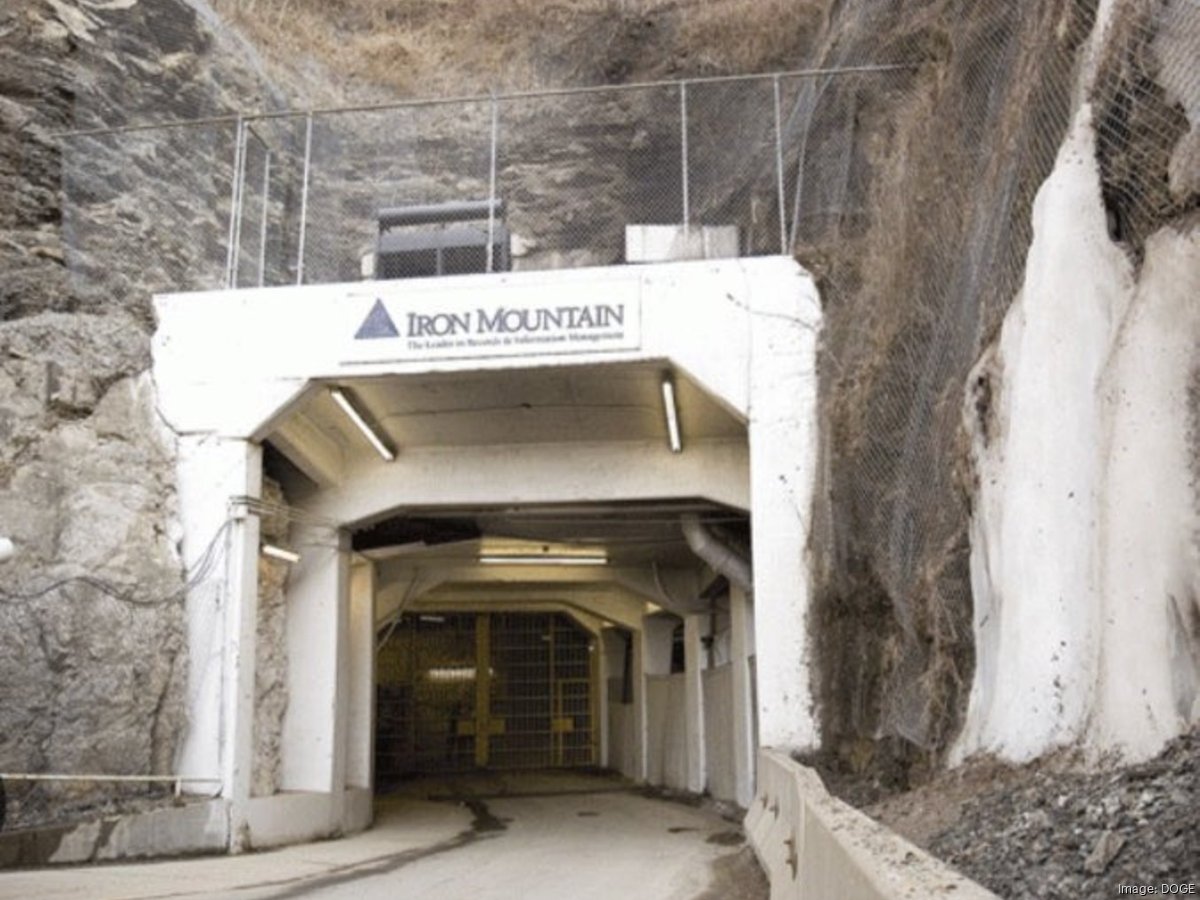
Getting to the Arctic World Archive is itself an adventure. The journey begins with a flight to Longyearbyen, the world's northernmost town with a permanent population. From there, visitors travel by vehicle to the entrance of the old coal mine.
The entrance is deliberately unassuming—a simple door in the mountainside, marked only by a small sign. This low profile is intentional; the best protection is obscurity combined with physical resilience.
The illuminated entrance tunnel leading deep into the mountain
Inside, the temperature drops immediately. Even in summer, when the Arctic sun doesn't set, the interior maintains a constant -6°C. The air is dry and still—perfect conditions for long-term preservation.
The main vault chamber lies at the end of a long tunnel. Rows of sealed containers line the walls, each containing reels of archival film. There's no hum of servers, no blinking lights, no cooling fans. Just silence and the steady cold of permafrost.
The Depositor Ceremony
For select Eternity.Photos customers—those who choose our Arctic Tomb package—we offer an extraordinary opportunity: the chance to personally deposit your archive.
This isn't a marketing gimmick. There's something profound about traveling to the edge of the inhabited world, walking into a mountain, and placing your family's memories into a vault designed to outlast everything you know. Past participants describe it as a quasi-religious experience—a confrontation with time and mortality that reframes one's relationship with memory.
"When I placed my grandmother's photos into that vault, I felt like I was completing something she started 80 years ago. She couldn't have imagined this place, but somehow, she led me here."
— Maria S., Eternity.Photos customer, 2025
Security and Access
Security at the Arctic World Archive operates on multiple levels:
- Physical: 300 meters of solid rock, reinforced tunnel construction, blast doors
- Geographic: Remote location accessible only by air or sea
- Legal: International treaty protection (Svalbard Treaty of 1920)
- Political: Demilitarized zone status prevents military action
- Environmental: Natural permafrost maintains temperature without power
- Procedural: Multi-party access protocols, no single point of control
Importantly, the archive is designed to be accessible to future generations even if current institutions fail. The data is not encrypted—anyone who can physically reach the vault and read the film can access its contents. This is deliberate: we're storing information for a future we can't predict, and encryption keys might not survive.
The Eternity.Photos Connection
When you choose Eternity.Photos' Arctic Tomb package, your photos undergo a journey from digital to permanent:
- Upload: Your photos are securely transmitted to our processing facility
- Conversion: Images are optimized and written to archival film
- Quality Check: Each frame is inspected for clarity and permanence
- Transport: Sealed containers are shipped to Svalbard via secure courier
- Deposit: Your archive is catalogued and placed in the vault
- Confirmation: You receive GPS coordinates and accession documentation
Your photos join the Vatican manuscripts, the GitHub code, and the cultural heritage of nations. They become part of humanity's permanent memory.
🏔️ Your Photos, Preserved Forever
The Arctic World Archive represents the most serious attempt in human history to preserve information indefinitely. With Eternity.Photos, this same level of protection is available for your family memories. Not stored. Entombed. Forever.
Why This Matters
In an age of cloud storage and infinite digital copies, the Arctic World Archive might seem anachronistic. But consider: every digital photo you've ever taken depends on electricity, functioning hardware, compatible software, and companies that continue to exist.
The Arctic World Archive depends on none of these things. A thousand years from now, when every server from our era has turned to dust, the archives in Svalbard will remain readable. A future archaeologist could decode our photos with technology no more advanced than a microscope.
That's the difference between storage and permanence.
Your great-grandchildren's great-grandchildren could make a pilgrimage to Svalbard, request your family's archive, hold the film up to the Arctic light, and see the faces of their ancestors. No passwords. No accounts. No technology more complex than human vision.
That's what the Arctic World Archive offers. That's what "forever" means.